Root Archetypes
The Medicine Buddha and Green Tara as Mirrors of Soma's Roots
The Medicine Buddha and Green Tara archetypes can be understood as symbolic reflections of the two primary components of Soma—Peganum harmala and Acacia—each expressing distinct yet inseparable aspects of primordial awareness.
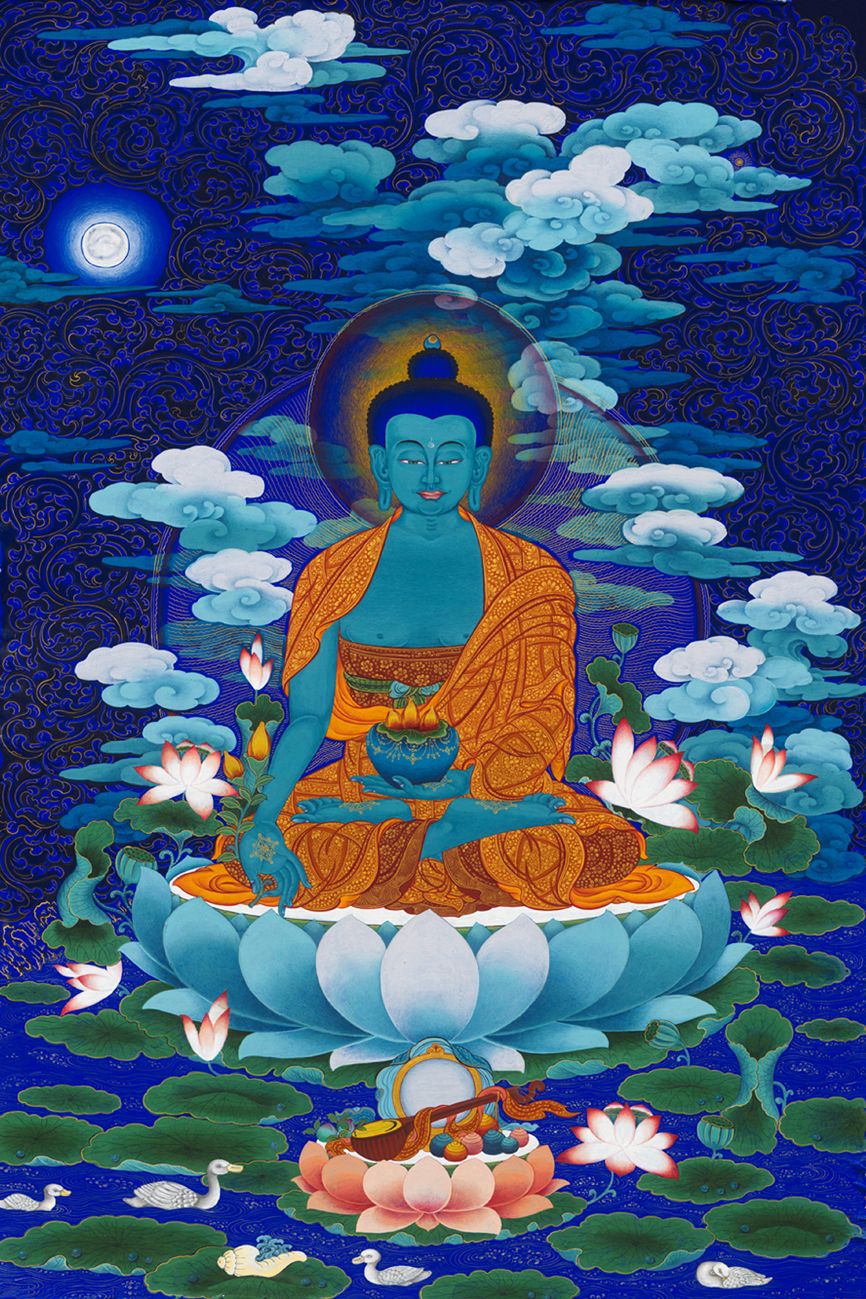
Medicine Buddha
Medicine Buddha embodies relaxed stability, healing, and deep restoration. Seated, grounded, and holding a bowl of Amrta—the medicinal nectar of immortality—he represents the purifying and regenerative aspects of awakening. This symbolism directly mirrors the action of Peganum harmala, whose restorative beta-carboline alkaloids induce profound relaxation, dissolve tension, and reveal the fertile ground of open awareness.
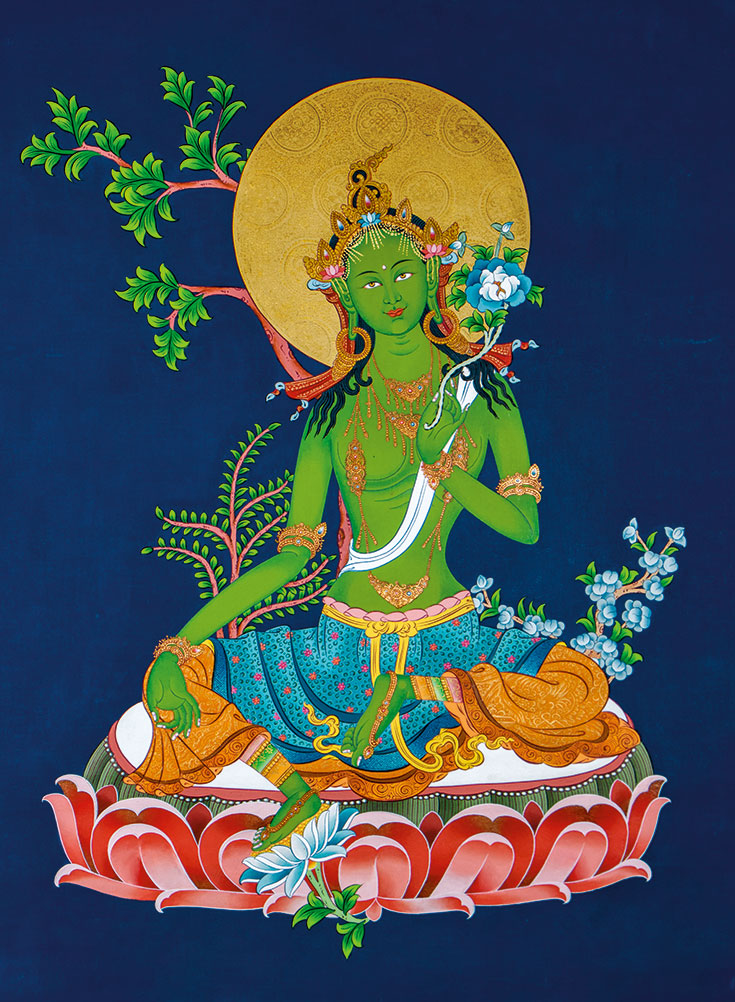
Green Tara
Green Tara embodies fearlessness, dynamic spontaneity, and compassionate response. Her green body, holding a flower, symbolizes her manifestation through the plant kingdom. Seated in the Khadira forest with one foot extended, she remains poised to respond.
Khadira is a specific Acacia tree associated with Green Tara, one subspecies of which is known in Sanskrit as Somavalka—meaning "bark containing Soma."
Revered in Tibet, Kashmir, and India as the Bodhisattva Dakini of the Khadira forest (Khadiravani-Tara), she guides practitioners along the path, removing obstacles and liberating tension.
Green Tara mirrors the luminosity and revelatory function of Acacia—ferrying beings across veils of fear, concept, and dualistic illusion into direct recognition of their lucid nature.
Union
The marriage of the Medicine Buddha and Green Tara is an archetypal reflection of the living wisdom Soma expresses biochemically—the union of openness and lucidity as radiant compassion.
Each archetype points, in its own register, to the same non-dual truth: liberation is not created, but revealed when mind-body tension relaxes and awareness is recognized—open, lucid, and compassionately alive.